
We were disappointed to learn this week that Biodiversity Net Gain (BNG) legislation has been delayed and will not launch as planned in November. Like many others across the industry, we’ve been preparing for the new legislation for some time now and have been working with developers to help them find the right solutions.
Biodiversity Net Gain is an initiative designed to ensure that new developments leave the environment in a demonstrably better condition than before. Not only does this support wildlife but it has significant other benefits including providing cleaner and greener areas to live and work, improved flood protection plus a positive impact on the effects of climate change.
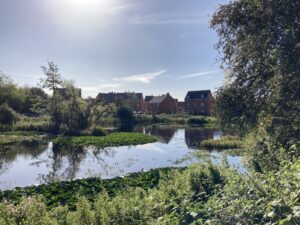
We are pleased that it appears the delay to BNG implementation is only short-term with an expectation that it will now come into effect in January 2024. This will provide more time for the Government to publish the further guidance, regulations and materials required which they have confirmed will be released by the end of November. This should allow developers, landowners, and local authorities to then effectively prepare and implement BNG in January.
What are the implications of the delay to Biodiversity Net Gain?
Whilst BNG will not be mandated by law until January, it does form part of the Environment Act 2021 and local authorities across the country have already incorporated it into their local plans. We have been involved in several examples where this is the case including some where developers have been required to demonstrate more than the 10% net gain outlined in the legislation.
The delays to mandatory Biodiversity Net Gain provide some additional time for all parties to digest the detailed guidance once released in November and then prepare for the January launch.
What action should housebuilders take in relation to BNG?

The State of Nature 2023 report was published on the same day as the delays to BNG were announced. It outlines the need for greater protection of wildlife, highlighting a significant ongoing decline across a range of species. The report blames this decline mostly on human related activities such as habitat loss, demonstrating further the need to implement measures as soon as possible to halt and reverse this trend.
We recommend housebuilders keep implementing additional improvements for biodiversity over and above current requirements, introducing the principles of the legislation on upcoming schemes and demonstrating their commitment to sustainable development. Not only will this underpin their organisation’s environmental credentials, it will also help in preparation for the mandatory change.
This additional time can be used to continue preparing for the formal introduction of Biodiversity Net Gain, below are our recommendations for housebuilders:
- Once the further detail is released in November, developers should review to aid them with implementation
- Prepare and upskill colleagues, make sure they are aware of the changes and how it will affect the development process, There are a range of BNG training courses and webinars available
- Identify and explore the solutions available for BNG and its ongoing management, both on and offsite
- Find out the approach of the local authorities you operate in. Local plans may already mention BNG and require a % gain, this could also be above 10%.
How are Meadfleet preparing for BNG?

Our teams continue to keep up to date with the latest training and advice available on Biodiversity Net Gain. Our ecology-led approach means we are already managing open spaces for biodiversity, identifying, and implementing improvements. We remain committed to educating and engaging residents and wider communities in the benefits of biodiverse habitats to build support for ecological features in their neighbourhoods.
Once the further detail is available in November, we will review this and provide updates to our developer partners particularly in relation to open space management and onsite and offsite solutions.
We welcome discussions with developers to help them explore long-term management options. Call us on 01438 890780 or email enquiries@meadfleet.co.uk.
For more information visit:
https://www.meadfleet.co.uk/managingbiodiversitynetgain/
https://cieem.net/i-am/current-projects/biodiversity-net-gain/
About Meadfleet
Meadfleet are a leading sustainable land-adopting management company. We have in-house ecologists with expertise in the BNG metric and are already applying the principles of Biodiversity Net Gain across our existing open space portfolio in England and Wales. Established in 1995, Meadfleet manage over 330 developments and 42,000 residential properties in our portfolio, with a strong balance sheet.
Meadfleet offers management of Biodiversity Net Gain delivery both on a managed development and on offsite areas, either via customer contributions or commuted sums. Our adoption model relieves developers of ongoing liabilities and management costs.
The Meadfleet model removes onerous liabilities from homeowners yet still encourages their input and engagement into the management of their local environment. We are committed to providing an excellent service to residents as demonstrated by our Excellent rating on Trustpilot and are members of The Property Ombudsman Scheme (TPOS), offering customers free, independent redress should they feel it is required. We are happy to work with residents groups and positively encourage the creation of these on the developments we are involved with. We believe this opens an effective two-way dialogue between homeowners and ourselves.
As a land-adopting management company, Meadfleet take long-term responsibility of open space, building customer and community relations and implementing perpetual management and improvement plans. We take a holistic and independent approach to managing areas of open space for the benefit of all residents, biodiversity and the wider environment.