
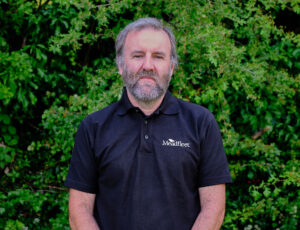
Our Ecology & Conservation Manager has had a busy time of late. Alongside keeping up to speed with the forthcoming Biodiversity Net Gain (BNG) regulations, planning year 5 of our award-winning Bee Friendly campaign and his regular duties of helping ensure all our open spaces are maximised for biodiversity, Paul has achieved two major milestones.
Firstly, he has become a STEM ambassador, meaning he is now part of a network of volunteers aiming to educate and inspire young people to pursue a career in Science, Technology, Engineering and Mathematics.
Paul’s focus will be on ecology, passing on his enthusiasm for the natural world and advising on the academic and vocational possibilities in this increasingly important subject area.

Through Paul’s work visiting schools as part of our Meadfleet Academy and leading events for community groups, and also in his local community, his aim is to inspire everybody to appreciate the wildlife around them and to understand the importance of science education.
Paul has also recently taken The Botanical Society of Britain and Ireland (BSBI) Field Identification Skills Certificate (FISC). The FISC is becoming established as the industry standard for assessing botanical survey skills. As such it is used as a measure of competence for professional ecologists. The exam determines a candidate’s botanical skill level on a scale from 1 (beginner) to 5 (professional) with 6 being awarded in exceptional cases.
Each test starts with a lab session, where the candidates are asked to name fresh specimens of 30 species collected across Britain and Ireland – the plants can be from any habitat and geographical location across the British Isles, from coastal areas to mountain summits. Next there is a site survey, where candidates spend a couple of hours recording as much as they can in a small, interesting site – the identify and location of the site is not made known to candidates prior to the exam. The candidate’s list is then compared against a known list of plants to calculate a score.
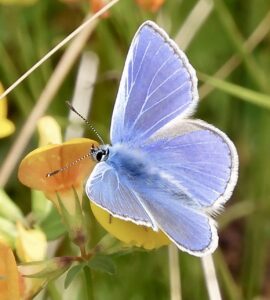
Paul’s exam was held in Pontefract in West Yorkshire, and the field test was held at Brockadale Nature Reserve. The site is managed by Yorkshire Wildlife Trust and supports a mosaic of limestone grassland, semi-ancient woodland, open crags, flood meadow and river habitat. The test area focussed on a meadow area which supports a wide variety of plants.
Paul obtained a Level 4, which is the recommended standard for undertaking botanical surveys including National Vegetation Classification assessments.
Here at Meadfleet we are committed to managing open spaces for biodiversity and inspiring the wider communities in which we work in ecological matters. By having experts such as Paul on our team we can ensure we can achieve this.
For further information on Stem Ambassadors visit – https://www.stem.org.uk/stem-ambassadors
For more details on the FISC visit – https://bsbi.org/field-skills
About Meadfleet
Meadfleet are a leading sustainable land-adopting management company. We have in-house ecologists with expertise in the BNG metric and are already applying the principles of Biodiversity Net Gain across our existing open space portfolio in England and Wales. Established in 1995, Meadfleet manage over 330 developments and 42,000 residential properties in our portfolio, with a strong balance sheet.
Meadfleet offers management of Biodiversity Net Gain delivery both on a managed development and on offsite areas, either via customer contributions or commuted sums. Our adoption model relieves developers of ongoing liabilities and management costs.
The Meadfleet model removes onerous liabilities from homeowners yet still encourages their input and engagement into the management of their local environment. We are committed to providing an excellent service to residents as demonstrated by our Excellent rating on Trustpilot and are members of The Property Ombudsman Scheme (TPOS), offering customers free, independent redress should they feel it is required. We are happy to work with residents groups and positively encourage the creation of these on the developments we are involved with. We believe this opens an effective two-way dialogue between homeowners and ourselves.
As a land-adopting management company, Meadfleet take long-term responsibility of open space, building customer and community relations and implementing perpetual management and improvement plans. We take a holistic and independent approach to managing areas of open space for the benefit of all residents, biodiversity and the wider environment.