
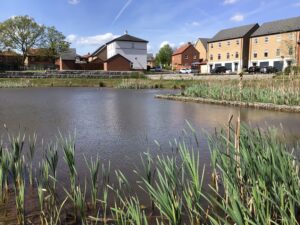
Why have a pond?
One of the best things you can do to attract wildlife to your garden, and support biodiversity in your local area, is to provide a pond.
- Birds and mammals will drink water from ponds
- Amphibians such as frogs, toads, and newts require water to breed
- Insects depend on ponds as a source of water and as a habitat for larvae
What if I don’t have enough room?
Even a tiny pond can provide a benefit for wildlife! A large pond with different depths of water will provide habitat for a wide variety of species, but even a washing-up bowl dug into your garden and allowed to fill with rainwater can benefit birds and wildlife visiting your garden.
Planning a pond
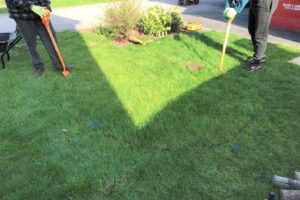
The first thing to do is decide on an appropriate location for your pond. You will need a level area of ground that can be dug to at least 1 foot / 30cm depth. TIP – Consider what you can do with the soil and turf! The pond needs to be in an area where it will receive some sunlight, but where there is minimal likelihood of people accidentally stepping in the pond or falling in!
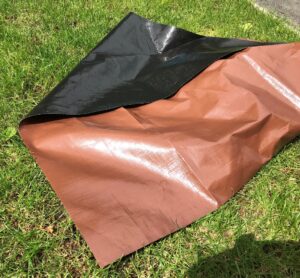
To ensure the pond will hold water effectively a liner will need to be installed, which can be picked up for around £20 at a local hardware store or online. You can line the pond the natural way with clay, a plastic liner/sheeting can be used or a plastic pre-shaped mould. TIP – If using plastic sheeting, make sure that you incorporate the depth. For example, if the surface area of the pond is 1m x 2m, then a liner of 2m x 3m would be required. If using plastic sheeting ensure that the ground beneath the sheet is free from sharp stones to avoid rips or tears. You can always line with sand or use the turf you removed earlier!
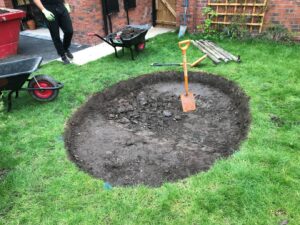
Pre-shaped moulds usually contain shelves, as different plants and animals will utilise different depths and contours in the pond. If using plastic sheeting then try to create shallow areas, a deeper area, and some shelves yourself to provide different features to host a greater variety of wildlife.
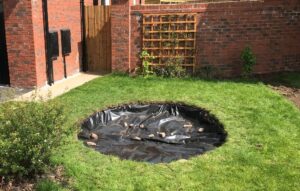
Adding stones
Before the pond fills with water a great step to include is placing different size stones in the bottom of the pond. A variety of aquatic invertebrates use garden ponds, many of which will benefit from submerged rocks, stones, and gravel. Some species will use gaps between stones to shelter, others will use such features to hide when hunting prey. Bigger rocks that poke above the water level can be a great resting place for bees, butterflies and insects!
Filling with water
Tap water is treated and contains chemicals so it is best to allow your new pond to fill with rainwater. Rather than waiting for it to rain (which could be difficult in the summer!) you can install a water butt in your garden that will collect and store rainwater. This is not only useful for filling but for topping up the water level in your pond during dry spells and also for watering plants in the garden through the summer.
Adding plants
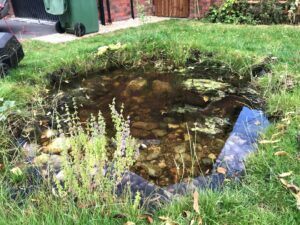
Aquatic plants can be purchased from some garden centres or online. It is always best practice to plant native species, as these are adapted well to UK conditions and will provide the best benefit to our wildlife. Submerged plants are usually ‘oxygenating’ plants, which release oxygen into the water preventing the pond from turning stagnant and improving conditions for wildlife, but some floating and emergent plants can also add oxygen. Plants such as water crowfoot will oxygenate the water whilst providing floating leaves and emergent flowers. Some floating plants will benefit wildlife by creating shaded and sheltered areas of the pond. Emergent plants will provide structure for flying insects such as dragonflies and damselflies and nectar for pollinating insects. Pond plants will usually be sold in a basket which can be placed directly in the pond.
You may see new plants appear in the pond, a result of seeds or fragments of vegetation transferred from other ponds by birds and animals!
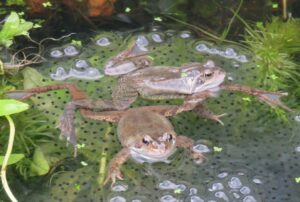
Animals
There is no need to introduce any fish, amphibians, insects, or other invertebrates to your new pond. Once the pond has been established such species will naturally find their way there.
One very important point to consider is allowing animals to safely leave the water. Amphibians are happy jumping down into the water but if the pond sides are too steep then they may be unable to leave. Similarly, if animals such as hedgehogs approach the water to drink they will need some means of escape. So, ensure a gently sloping ramp is incorporated into the pond, even a small plank of wood will help.
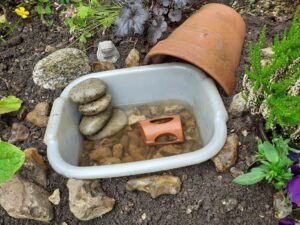
Smaller ponds
To create a ‘washing-up bowl pond’ firstly measure the depth, length, and width of your bowl, and dig a hole to incorporate this (remember that it’s always better to ask parents’ permission before burying their washing-up bowl in the garden!). Place some stones in the bowl to create some features of interest for aquatic insects, and ensure that either the stones provide an exit route for any animals or add in a piece of wood positioned to allow any small mammals to climb out should they fall in. Once the bowl has filled with rainwater some plants may colonise naturally, or a small bunch of oxygenating plants could be purchased from a garden centre or pet shop.
We wish you the best of luck with building your pond, and we would love to see any photos! You can email them to us at communities@meadfleet.co.uk

About Meadfleet
Meadfleet are a leading sustainable land-adopting management company. We have in-house ecologists with expertise in the BNG metric and are already applying the principles of Biodiversity Net Gain across our existing open space portfolio in England and Wales. Established in 1995, Meadfleet manage over 330 developments and 42,000 residential properties in our portfolio, with a strong balance sheet.
Meadfleet offers management of Biodiversity Net Gain delivery both on a managed development and on offsite areas, either via customer contributions or commuted sums. Our adoption model relieves developers of ongoing liabilities and management costs.
The Meadfleet model removes onerous liabilities from homeowners yet still encourages their input and engagement into the management of their local environment. We are committed to providing an excellent service to residents as demonstrated by our Excellent rating on Trustpilot and are members of The Property Ombudsman Scheme (TPOS), offering customers free, independent redress should they feel it is required. We are happy to work with residents groups and positively encourage the creation of these on the developments we are involved with. We believe this opens an effective two-way dialogue between homeowners and ourselves.
As a land-adopting management company, Meadfleet take long-term responsibility of open space, building customer and community relations and implementing perpetual management and improvement plans. We take a holistic and independent approach to managing areas of open space for the benefit of all residents, biodiversity and the wider environment.