
The designation of onsite areas as Biodiversity Net Gain (BNG) habitats has introduced significant changes for open space management companies. Housebuilders require an ongoing management solution that protects their legacy with proven in-house expertise and experience to meet all the requirements of the legislation. A collaborative approach is beneficial, so that all parties can work together through the process to meet the various challenges with positive outcomes.
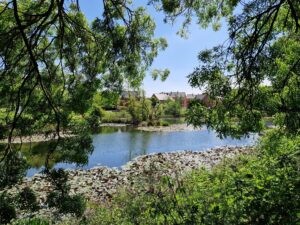
Meadfleet have been voluntarily improving the biodiversity value of the open spaces in our existing portfolio for some time now. Areas have been assessed and enhanced following the principles of Biodiversity Net Gain. This has led to developments now supporting diverse grasslands, native wildflower areas, new hedgerows and associated margins, and areas of scrub and woodland. Whilst not compulsory on historic developments, this demonstrates how our approach to open space management combined with customer education and engagement, will ensure the success of Biodiversity Net Gain on future projects on behalf of housebuilders.
BNG emphasises the importance of involving ecologists early in the planning process to evaluate habitat impacts and develop effective mitigation strategies. Equally critical, however, is input from land managers and contractors to ensure the habitats can be practically delivered and maintained.
Traditionally, developers installed public open spaces according to approved landscape plans, which were later inspected by the management company before maintenance began. Meadfleet collaborates with housing developers during the planning stage, providing advice based on our 30 years’ experience and helping ensure developers optimise BNG opportunities.
Practical Considerations in Habitat Management

Incorporating landscape professionals during planning allows for consideration of factors like accessibility, topography, and drainage, all of which affect habitat success and maintenance costs. For instance, well-drained, easily accessible grassland can be managed using standard equipment, while remote or poorly drained areas may require specialised contractors and higher costs.
Traditional public open space maintenance focuses on keeping landscapes safe, tidy, and accessible. Meadfleet’s approach to BNG has required educating contractors on habitat-specific management practices. Training courses and guidance from the Ecology Team are provided to Regional Managers, who oversee monthly inspections to monitor habitat success.
Challenges in BNG Habitat Management
The shift from traditional, routine maintenance to BNG-focused management has highlighted several challenges:
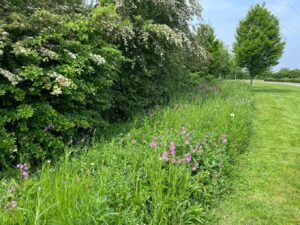
• Equipment Limitations: General contractors may lack the necessary tools, such as meadow-cutting equipment, which hinders the removal of arisings and can negatively impact habitats.
• Contract Structures: Contracts must account for additional tasks like meadow cutting, requiring greater flexibility.
• Specialist Contractor Availability: The demand for specialist contractors, such as those managing wetlands or meadows, may lead to delays or suboptimal timing of works.
• Botanical Skills: Site managers would benefit from training in botanical skills to identify and address issues early through routine inspections, expediting necessary adjustments.
• Contractor training: Contractors from horticultural or amenity backgrounds may need additional support in adopting biodiversity-focused methods and explaining these to the public.
Meadfleet’s Ecology Team is qualified to undertake BNG metrics and condition assessments, ensuring habitats are effectively managed. These efforts aim to overcome challenges and prioritise biodiversity while maintaining safe and accessible spaces for communities.
By adopting innovative approaches to greenspace management and addressing practical challenges, Meadfleet continues to lead in integrating BNG principles into residential developments, ensuring a positive impact on nature and the communities it supports.
Paul Cassidy, Ecology and Conservation Manager
About Meadfleet
Meadfleet are a leading sustainable land-adopting management company. We have in-house ecologists with expertise in the BNG metric and are already applying the principles of Biodiversity Net Gain across our existing open space portfolio in England and Wales. Established in 1995, Meadfleet manage over 330 developments and 42,000 residential properties in our portfolio, with a strong balance sheet.
Meadfleet offers management of Biodiversity Net Gain delivery both on a managed development and on offsite areas, either via customer contributions or commuted sums. Our adoption model relieves developers of ongoing liabilities and management costs.
The Meadfleet model removes onerous liabilities from homeowners yet still encourages their input and engagement into the management of their local environment. We are committed to providing an excellent service to residents as demonstrated by our Excellent rating on Trustpilot and are members of The Property Ombudsman Scheme (TPOS), offering customers free, independent redress should they feel it is required. We are happy to work with residents groups and positively encourage the creation of these on the developments we are involved with. We believe this opens an effective two-way dialogue between homeowners and ourselves.
As a land-adopting management company, Meadfleet take long-term responsibility of open space, building customer and community relations and implementing perpetual management and improvement plans. We take a holistic and independent approach to managing areas of open space for the benefit of all residents, biodiversity and the wider environment.