

With Biodiversity Net Gain (BNG) legislation on the horizon, our Managing Director, David King explores the options for housebuilders in a recent article for Housebuilder and Developer Magazine. Below is a short summary of the piece which looks at the challenges BNG brings and the solutions available.
THE COMPLEXITIES
In January 2024 it becomes mandatory under The Environment Act 2021, that all future planning applications of 9 units + must produce at least a 10% uplift in biodiversity. With the aim of creating a strategic nature recovery plan to leave the natural environment in a better condition. As there will always be a loss of biodiversity from construction, housebuilders will have 3 options: 1) providing onsite net gain within the development, 2) offsite solutions, or 3) the purchase of statutory credits from Natural England. It is likely that a combination of these solutions will be required to achieve the necessary gains.
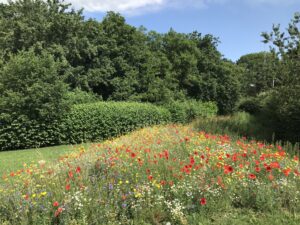
Developers cannot pick whichever option suits them for each new scheme. The legislation stipulates a hierarchy with onsite solutions the primary option, then offsite, and finally the purchase of statutory credits is a last resort. It will need to be demonstrated that a solution is unachievable before moving to the next option.
With onsite net gain the primary solution, most future developments will incorporate more extensive and complex habitats within their green infrastructure, requiring suitable long-term management. This has its own challenges depending on the scale of open space available and the impact this has on the developable land.
The marketplace for the purchase of offsite units generated by 3rd party landowners is unclear with no formal central database and the Natural England Biodiversity Net Gain Register being used purely for registering a development’s allocated offsite units.
It is unlikely there will be local offsite units available for all requirements from the outset. Buying and selling units across local planning authority (LPA) boundaries will be inevitable which will increase costs as penalties are incurred when units are outside the LPA. Alternatively, there is an option for housebuilders to buy offsite land to generate the required credits and appoint a suitable management organisation to deliver the biodiversity improvements over the 30-year period.
The statutory biodiversity credit scheme aims to ensure that the pace of development in England is not impacted by the new legislation, offering a costly last resort solution. With prices starting at £42,000 plus VAT per credit, is this a viable solution even in the short term?
The additional requirements are certainly a challenge for developers and will impact the viability and speed of housing developments, with small and medium sized developers likely to be most affected.
SOLUTIONS

With a Masters in Ecology and Conservation, our Operations Director, Samantha Hursey, is leading Meadfleet’s BNG solutions and through our discussions with developers, we’ve been able to highlight the pros and cons of different options, both at a high level and in detail. For example, the purchase of adjacent land for onsite offsetting might seem a straightforward solution but it comes with challenges. Should it have public access and what implications does this bring in terms of increased maintenance costs. Plus, the effect of additional areas on baseline calculations must also be considered.
There is also the question of long-term funding of on and offsite solutions. We are involved in a range of scenarios, including resident contribution and commuted sum solutions, or a mix of the two.
LIFETIME MANAGEMENT MODEL
We understand the concerns in the marketplace regarding the long-term responsibility of a 30-year covenant and selecting the right management model to entrust with the new requirements.
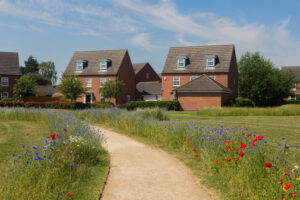
There is a need for a lifetime management solution that can take on the liability and complexity of the requirements involved. There are already many aspects of open space management that require specialist expertise including play areas, woodlands, and SuDS. With members of the public accessing open spaces, risks must be carefully managed. With the addition of BNG and the crucial role the legislation will play in providing spaces for nature, it is vital that these areas are managed by experienced open space experts.
A lifetime management model with in-house expertise to manage all aspects of open space features objectively and responsibly over the long-term will ensure a developer’s legacy is protected and risks minimised. Developers should look for long-standing organisations with a proven reputation for excellence and expertise and the in-house specialist knowledge required. This approach also helps reduce customer costs and provides clear lines of accountability.
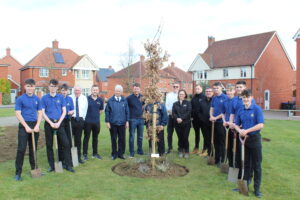
Open space management companies should be experts in managing open spaces for biodiversity and engaging customers in the benefits of managing areas for wildlife. In-house ecologists that will take on the adaptive management, monitoring, and surveying requirements of BNG and can provide support to developers throughout the process.
FINAL THOUGHTS
The benefit that biodiversity net gain will have to the current climate and biodiversity crisis is exponential and aligning the industry with the Government’s biodiversity net gain targets will more firmly place sustainability at the centre of future development. Through a collaborative solution-based approach and the positive promotion of BNG, we can help create a future where customers desire to live in a biodiverse neighbourhood and where developers are applauded for its implementation.
David King is Managing Director of Meadfleet.
The full article can be read here on the Housebuilder and Developer website.