
As winter brings colder weather and shorter days, many animals enter a process known as hibernation. Hibernation is a survival strategy that allows wildlife to endure winter without the need to forage when food may be scarce or migrate to fairer climates. Hibernation varies among wildlife but is typically characterised by a significant decrease in heart rate, low body temperature, and slowed metabolism. Some animals may simply slow down and demonstrate reduced movement, while others enter a deep and prolonged sleep until temperatures rise in spring.

Types of Hibernation
Many species of wildlife enter a state of overwintering, but only three species in the UK enter a state of true hibernation: dormice, bats and hedgehogs. Reptiles, amphibians, and many insects also rely on different forms of hibernation to survive the cold.
- Torpor – Also known as dormancy, torpor is a period of significantly reduced activity in animals. Unlike hibernation, torpor is involuntary and can occur in mammals like badgers and red squirrels. During torpor, the animal’s body temperature and metabolism drop, resulting in lower activity levels. Unlike hibernation, animals in torpor can enter and exit this state relatively easily, depending on environmental conditions.
- Brumation – Reptiles and amphibians enter a state of dormancy known as brumation during winter. As ectothermic creatures, they rely on external environmental conditions to regulate their body temperature. The colder weather reduces their activity levels and limits their ability to hunt, making brumation a crucial strategy for conserving energy. Amphibians, such as frogs, often overwinter underground or in structures on the ground’s surface to maintain moisture. Some may spend the winter at the bottom of ponds, buried in mud and leaves; however, this poses a risk of oxygen deprivation if the pond freezes over.
- Diapause – Diapause is a fascinating phenomenon observed in insects as a response to environmental conditions. This actively induced dormancy halts the developmental growth of the organism, effectively pausing their aging process. Diapause allows insects to align their life cycle with favourable weather conditions and improve their chances of survival. During this state, insects seek shelter in places such as leaf litter, beneath logs and rocks, or in crevices, homes, or holes in trees.
- Aestivation – This type of dormancy typically occurs in summer rather than winter, as it is a response to hot, dry conditions. Aestivation helps conserve energy and prevent dehydration by significantly reducing an animal’s metabolic rate. It is most observed in fish and invertebrates. When temperatures drop or moisture levels rise, animals in aestivation often quickly return to their normal activities.

How we can protect hibernating wildlife
Hibernating wildlife require safe, undisturbed spaces to complete their winter rest. By taking a few simple steps, we can safeguard our wildlife and give them the best chance of surviving the colder months.
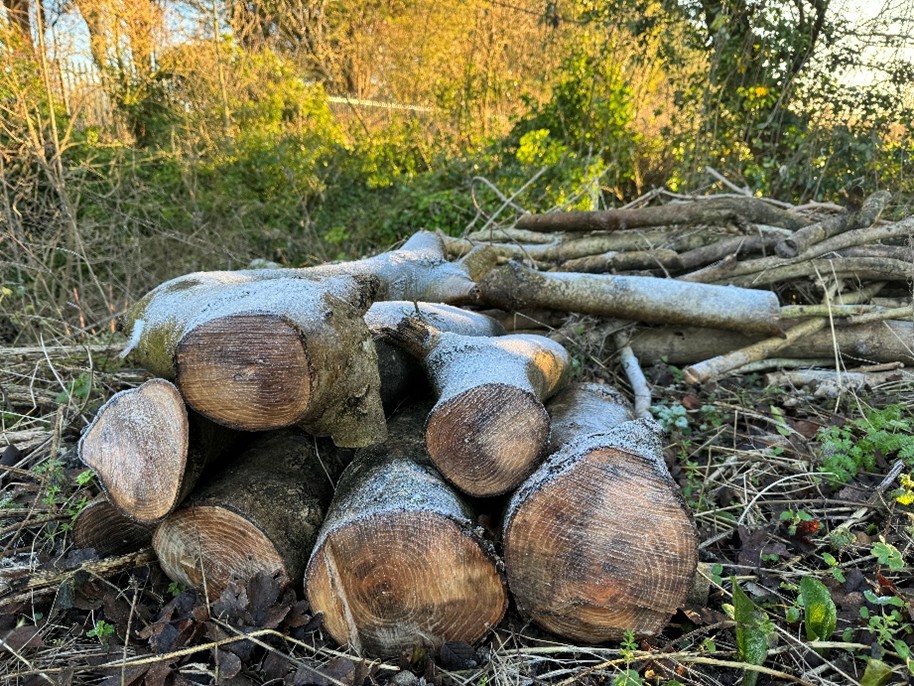
- Build or create hibernacula, stack log piles, construct rock piles and compost heaps, or leave areas of leaf litter to offer shelter for small mammals, reptiles, amphibians, and insects. Bat boxes can also be installed to provide a safe hibernation spot high up, away from predators and human disturbances.
- Garden ponds can serve as refuges for overwintering amphibians; therefore, it is importance to prevent ice from covering the entirety of your pond to maintain oxygen flow for those hibernating at the bottom.
- We should all be mindful of potential hibernation spots throughout winter. Disturbing hibernating wildlife can deplete their vital energy reserves. By preserving and safeguarding these spaces, we can help support hibernating animals and contribute to the overall health and diversity of our local ecosystems.
At Meadfleet, our ecology-led approach to open space management and commitment to supporting wildlife includes the creation of various habitats on our open spaces, including hibernacula and wildlife refuges. We also use arisings from tree works conducted onsite to build log piles, further enriching the habitat available for wildlife in our managed spaces.



About Meadfleet
Meadfleet are a leading sustainable land-adopting management company. We have in-house ecologists with expertise in the BNG metric and are already applying the principles of Biodiversity Net Gain across our existing open space portfolio in England and Wales. Established in 1995, Meadfleet manage over 330 developments and 42,000 residential properties in our portfolio, with a strong balance sheet.
Meadfleet offers management of Biodiversity Net Gain delivery both on a managed development and on offsite areas, either via customer contributions or commuted sums. Our adoption model relieves developers of ongoing liabilities and management costs.
The Meadfleet model removes onerous liabilities from homeowners yet still encourages their input and engagement into the management of their local environment. We are committed to providing an excellent service to residents as demonstrated by our Excellent rating on Trustpilot and are members of The Property Ombudsman Scheme (TPOS), offering customers free, independent redress should they feel it is required. We are happy to work with residents groups and positively encourage the creation of these on the developments we are involved with. We believe this opens an effective two-way dialogue between homeowners and ourselves.
As a land-adopting management company, Meadfleet take long-term responsibility of open space, building customer and community relations and implementing perpetual management and improvement plans. We take a holistic and independent approach to managing areas of open space for the benefit of all residents, biodiversity and the wider environment.