
The UK is a nation of bird lovers. We enjoy seeing birds in our countryside, towns and gardens, and hearing birdsong makes us feel closer to nature and instils a sense of wellbeing. This year almost 600,000 people took part in the RSPB Big Garden Birdwatch, to record the birds we see in our local area.
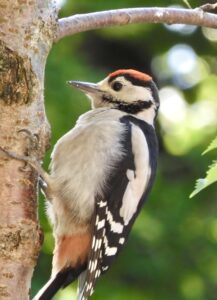
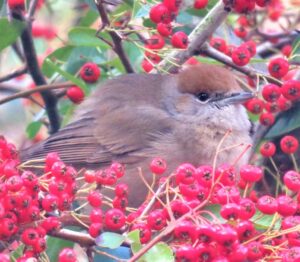
At Meadfleet we do all we can to manage our land to benefit biodiversity. Through habitat creation and sensitive management we can provide food and shelter for birds – our hedgerows provide berries as food and structure for nests and roosts, our meadows provide seeds and insect food, our trees provide nesting and roosting sites and vantage points.
As well as providing habitat and food on the open spaces on our developments, we want to support our customers in making their gardens havens for our wild birds. Small changes to the way we maintain our gardens, and the odd addition, can greatly benefit our feathered friends.
Gardening
- We can choose to plant trees, shrubs and flowers which will benefit birds.
- Generally trees which produce berries will benefit birds – native species such as cherry, elder, and rowan produce attractive flowers in spring whilst benefitting birds in the summer, autumn and winter.
- Shrubs such as pyracantha and berberis produce berries for food whist having thorny branches which protect nesting and roosting birds from predators.
- Try to choose a selection of plants which produce fruits are different times of year, for example ivy and mahonia produce berries late in the winter as opposed to the autumn.
- Do not use any pesticides on in your garden – birds can act as natural control of pests as they will eat aphids, slugs and other invertebrates.
Feeding
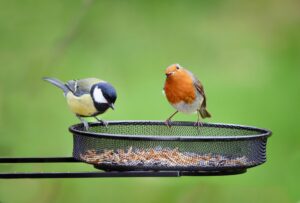
- As well as natural food provided in your garden in berries, seeds and invertebrates, we can choose to provide additional food to help birds through difficult spells, for example when there is less natural food around due to prolonged spells of dry weather in summer or cold weather in winter.
- Different species of birds rely on different food sources – some are herbivores, some are carnivores, and some are omnivores. Therefore a selection of bird food will benefit the most species, but the birds will be grateful of any food you can provide.
- Meadfleet are donating bird feeders made from recycled plastic to ensure they are as sustainable as possible. The feeders include a pack of sunflower hearts – energy-packed seeds which are a favourite of many birds, especially finches. The feeders can also be stocked with general wild bird seed.
- Other foods which benefit birds are fat balls and suet pellets. These are favoured by insectivorous birds, and so will attract a different set of diners to the bird seeds.
- Try to ensure that bird feeders are cleaned regularly to prevent the spread of any diseases between birds. For example our greenfinches and other finches can be affected by a parasite which is spread via feeding and watering stations in gardens. A disinfectant is sufficient to keep feeders clean and healthy.
Water
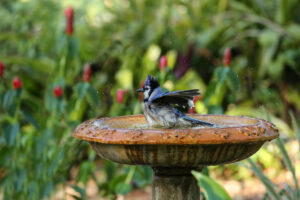
- All animals depend on water, and your garden birds will greatly benefit from a source of water to drink and to bathe in.
- A shallow saucer, or slightly deeper water such as a pond with shallow access points, is ideal.
- Ensure that any containers are cleaned regularly.
- A water station for birds is best positioned out in the open so that birds can drink and bathe whilst remaining aware of any potential threats from predators.
Behaviour
- Garden birds are wild animals, and whilst we all love to be close to nature try not to get too close to birds.
- Birds may become familiar with people who regularly fill bird feeders, but be sure not to encourage wild birds to come to your hand to collect food – birds need to retain their natural instincts to be aware of the potential dangers from large mammals.
- Try to site feeders and water in slightly open areas where birds can feel safe knowing that they have a view of potential predators.
- Pet cats are the main predator of garden birds, so we can help by keeping cats indoors, especially in late spring and summer when fledgling birds are leaving the nest. Also cat collars can be fitted with a bell to warn birds of their presence.
For more information on helping birds in your garden visit:

About Meadfleet
Meadfleet are a leading sustainable land-adopting management company. We have in-house ecologists with expertise in the BNG metric and are already applying the principles of Biodiversity Net Gain across our existing open space portfolio in England and Wales. Established in 1995, Meadfleet manage over 330 developments and 42,000 residential properties in our portfolio, with a strong balance sheet.
Meadfleet offers management of Biodiversity Net Gain delivery both on a managed development and on offsite areas, either via customer contributions or commuted sums. Our adoption model relieves developers of ongoing liabilities and management costs.
The Meadfleet model removes onerous liabilities from homeowners yet still encourages their input and engagement into the management of their local environment. We are committed to providing an excellent service to residents as demonstrated by our Excellent rating on Trustpilot and are members of The Property Ombudsman Scheme (TPOS), offering customers free, independent redress should they feel it is required. We are happy to work with residents groups and positively encourage the creation of these on the developments we are involved with. We believe this opens an effective two-way dialogue between homeowners and ourselves.
As a land-adopting management company, Meadfleet take long-term responsibility of open space, building customer and community relations and implementing perpetual management and improvement plans. We take a holistic and independent approach to managing areas of open space for the benefit of all residents, biodiversity and the wider environment.