

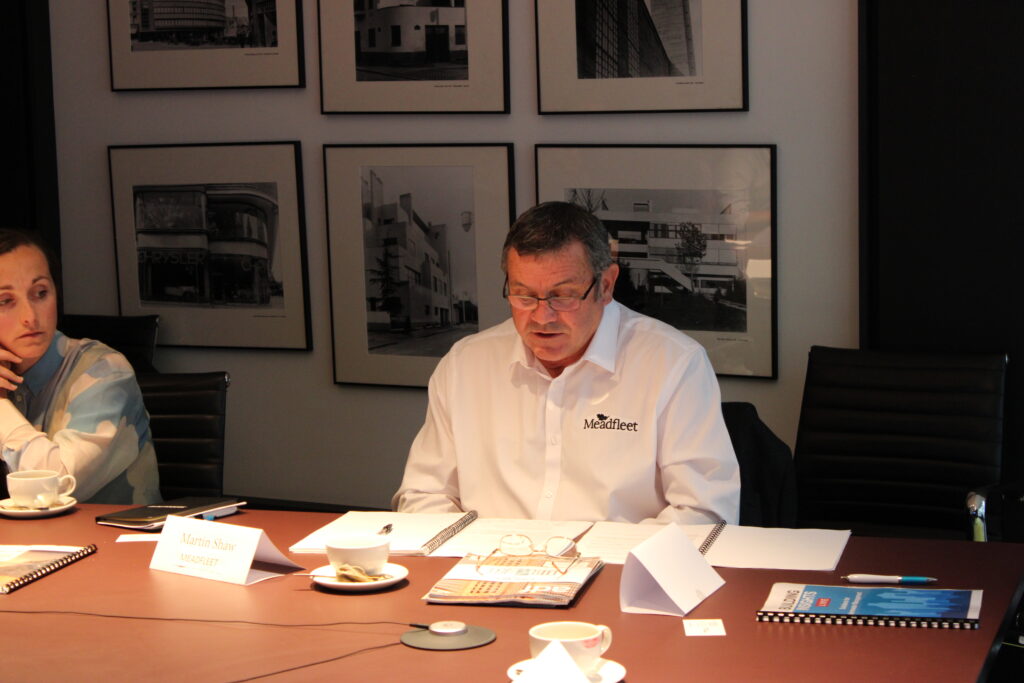
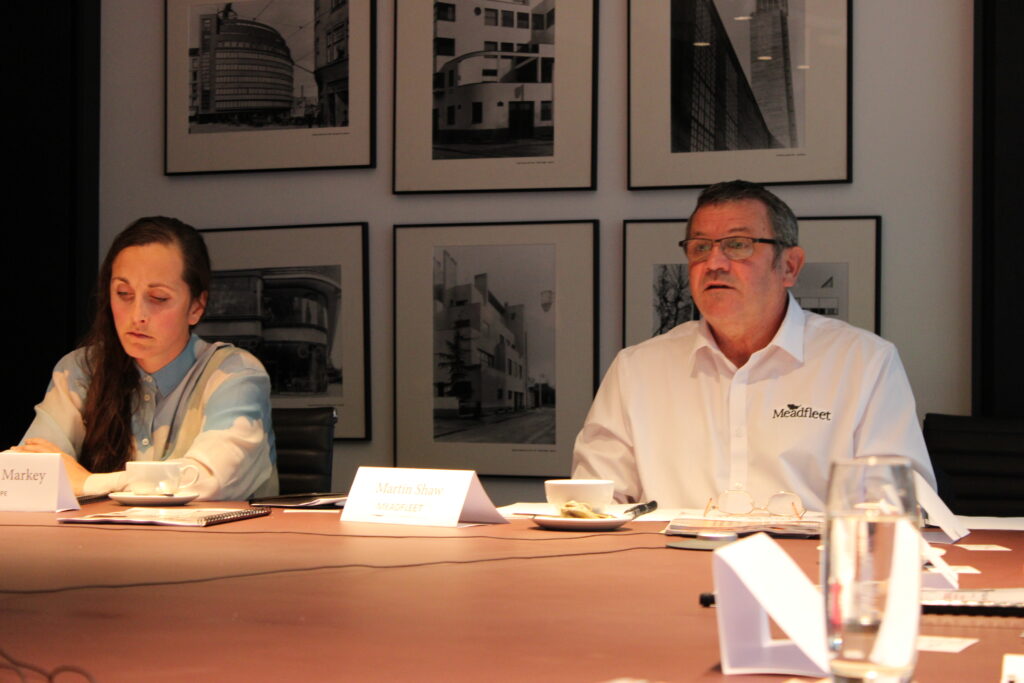
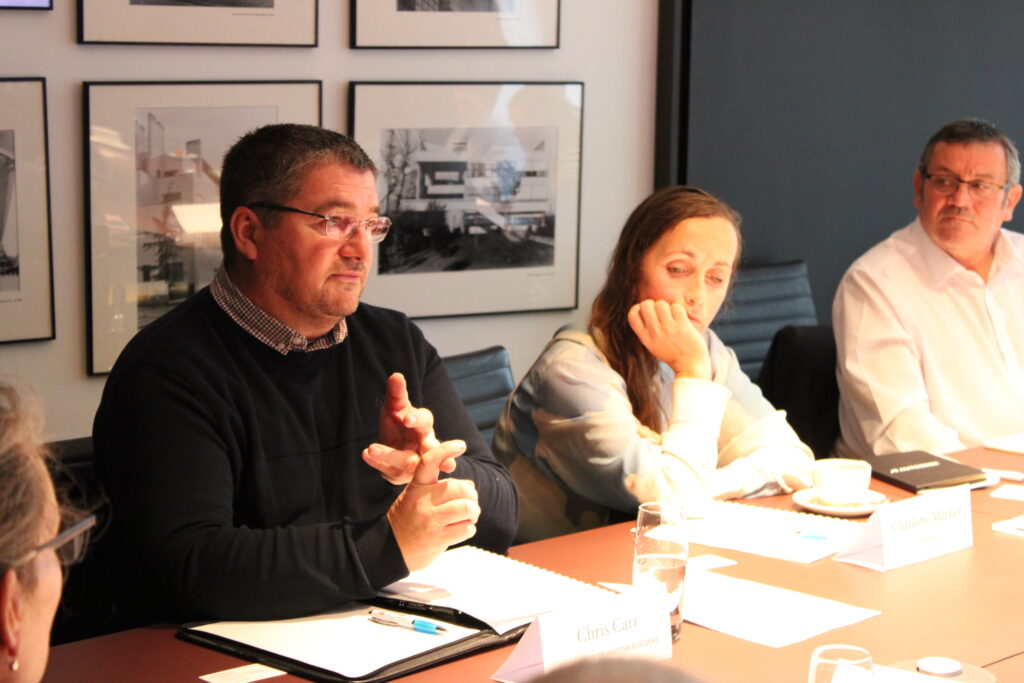
In October we were invited by Netmag Media to take part in their Building Insights LIVE roundtable event, discussing solutions for storm water management. With forthcoming legislation making SuDS a legal requirement on nearly all housing developments it’s crucial that the construction industry works together to realise the full benefits of these nature-based drainage solutions.
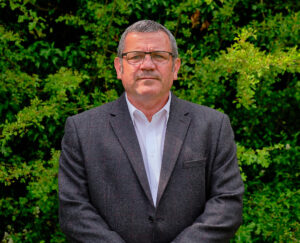
Martin Shaw, Senior Operations Director, represented Meadfleet at the event, providing input from a management and maintenance perspective. Having been with Meadfleet for over 17 years, Martin has extensive experience of a wide range of SuDS features from our 340+ developments.
Other industry experts joined the event including Sue Illman, co-author of the CIRIA SuDS manual and Steve Wilson from the Environmental Protection Group plus representatives from Cameron Homes and Carr and Carr Builders. Also in attendance were the event sponsors; Polypipe, Brett Landscaping and Innovyze.
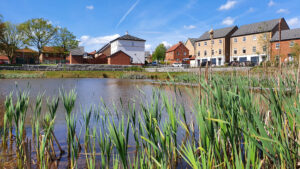
The event explored best practice in the design, installation and management of SuDS features. A key theme of collaboration was highlighted as a requirement to ensure success.
SuDS or Sustainable Drainage Systems are a key feature on residential developments. Not only do they mitigate the impact of new developments to reduce the risk of flooding they also help improve water quality and support biodiversity.
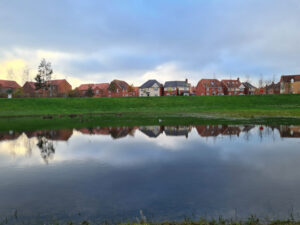
Meadfleet have been operating since 1995 and now care for over 250 SuDS features across England and Wales on the open spaces we manage. At the event, Martin gave feedback on the design of SuDS for optimal performance and ease of maintenance.
Once appointed by a housebuilder, Meadfleet provide SuDS management plans to help satisfy local authorities. Our team implement bespoke inspection and work schedules according to the specific design / requirements of the SuDS features once in our management. Alongside ensuring the drainage system is operating efficiently, we also seek to maximise the benefits for biodiversity, with our in-house ecologists providing practical support to make the most of these features.
With increasing extreme weather events and the impending requirement for SuDS on all new developments, there has never been a more important time for the industry to focus on sustainable drainage. Along with collaboration by all parties being highlighted as a primary factor, the ongoing management and maintenance by specialist parties plus practical, easy to implement design were also noted as key to SuDS success.
Read More:
HBD Building Insights Roundtable Live
https://www.meadfleet.co.uk/sustainable-drainage-systems-to-become-mandatory-on/
About Meadfleet
Meadfleet are a leading sustainable land-adopting management company. We have in-house ecologists with expertise in the BNG metric and are already applying the principles of Biodiversity Net Gain across our existing open space portfolio in England and Wales. Established in 1995, Meadfleet manage over 330 developments and 42,000 residential properties in our portfolio, with a strong balance sheet.
Meadfleet offers management of Biodiversity Net Gain delivery both on a managed development and on offsite areas, either via customer contributions or commuted sums. Our adoption model relieves developers of ongoing liabilities and management costs.
The Meadfleet model removes onerous liabilities from homeowners yet still encourages their input and engagement into the management of their local environment. We are committed to providing an excellent service to residents as demonstrated by our Excellent rating on Trustpilot and are members of The Property Ombudsman Scheme (TPOS), offering customers free, independent redress should they feel it is required. Meadfleet work with residents groups and positively encourage the creation of these on the developments we are involved with. We believe this opens an effective two-way dialogue between homeowners and ourselves.
As a land-adopting management company, Meadfleet take long-term responsibility of open space, building customer and community relations and implementing perpetual management and improvement plans. We take a holistic and independent approach to managing areas of open space for the benefit of all residents, biodiversity and the wider environment.