

The Eurasian beaver (Castor fiber) is native to the UK and the second-largest rodent in the world. By the 16th century, beavers were driven to extinction in the UK due to intense overhunting for their meat, fur and scent glands which produce a substance called castoreum. This natural secretion was commonly used in perfumes and food flavourings!
Fortunately, these marvellous animals are now making a welcome comeback, and their return couldn’t be more important. With an extraordinary ability to shape and restore waterways, beavers play a vital role in reducing flood risk and boosting biodiversity. At Meadfleet, we’re delighted to see evidence of beavers visiting one of our open spaces in Somerset.
Nature’s Builders
Beavers are often referred to as “ecosystem engineers,” and for good reason. By felling trees and constructing dams and lodges, they transform landscapes in ways that benefit a wide range of other species.
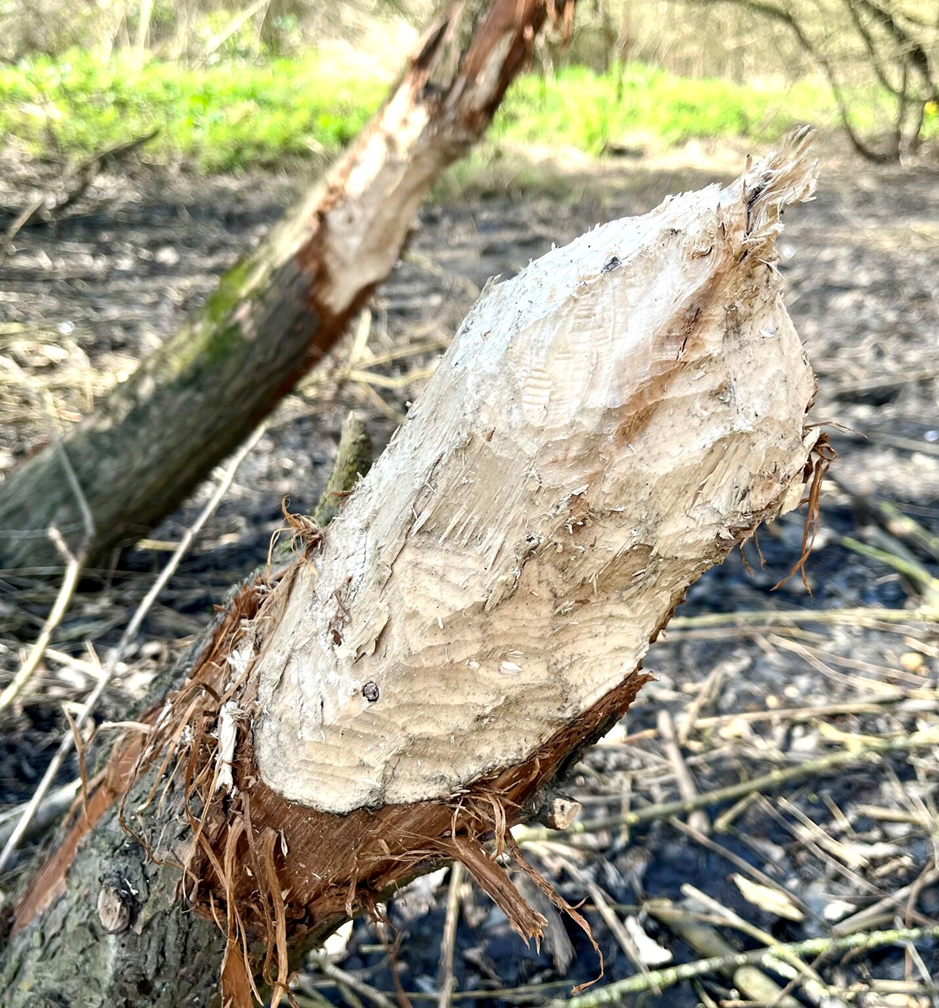
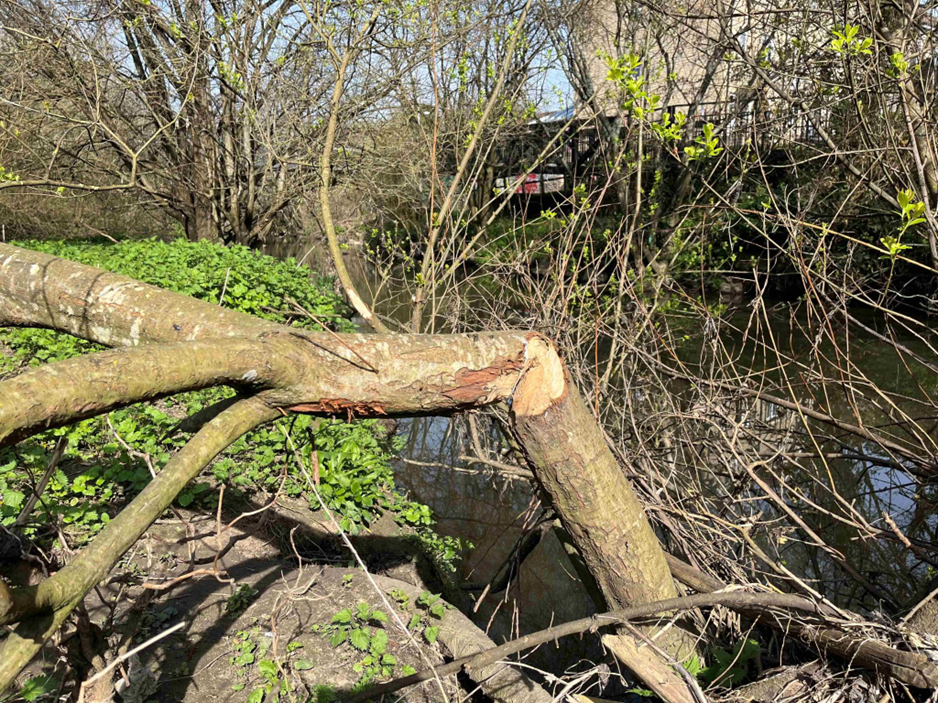
During a recent visit to monitor activity on site, we observed clear signs of beaver work with trees that had been felled. This was an intentional act that allows beavers to access the younger, more nutritious branches high in the canopy. These branches are then used both as a food source and as building material for their lodges and dams.
Creating Spaces for Wildlife
While fallen trees might initially look like damage, this process brings significant ecological benefits. Opening the tree canopy allows more light to reach the ground, encouraging a diverse range of plant life to flourish. In turn, this supports insects, birds, and other wildlife.
Many of the felled trees, particularly willows and other woody species, will regenerate from their base and often grow back stronger and denser. This cycle of growth and renewal creates a richer habitat over time.

A Closer Look
We recently deployed trail cameras in hopes of capturing more of the beavers, and we are delighted to share the below footage. Here we can see the beaver visiting our land, collecting and feeding on willow branches. Willow bark is a beavers favoured food source, and they will often strip a branch of its bark.
A Positive Sign for the Future
The return of beavers to our landscapes – whether through natural expansion or licensed reintroduction and release programmes across the UK – is a great reminder of how nature can recover when given the chance. Their presence on our open spaces highlights the importance of thoughtful land management and the role we can all play in supporting biodiversity.
We’re excited to continue monitoring their activity and sharing updates as their impact to the landscape unfolds!

About Meadfleet
Meadfleet is a leading sustainable land-adopting management company, established in 1995. We manage over 350 developments and 40,000 residential properties across England and Wales, supported by in-house expertise and decades of experience.
Our in-house ecologists bring expertise in Biodiversity Net Gain (BNG), and we offer management of BNG delivery both on managed developments and offsite areas, funded through customer contributions or commuted sums. Our adoption model relieves developers of ongoing liabilities and management costs.
The Meadfleet approach removes onerous responsibilities from homeowners while encouraging resident engagement in the stewardship of their local environment. We are members of The Property Ombudsman Scheme (TPOS), providing customers with free, independent redress if required. We also welcome and support resident groups, creating a valuable two-way dialogue that strengthens community involvement.
As a land-adopting management company, we take long-term responsibility for open space, building strong community relations and implementing ongoing management and improvement plans. Our independent, holistic approach ensures open spaces are managed sustainably for the benefit of residents, biodiversity, and the wider environment.